Monday, December 3, 2007

MIx Tape Reflection

Apologies for my near teary-eyed presentation today, but as you can imagine the project was a bit emotional. I made a mixed CD for my grandma and my mom and her siblings to remember all the good times they had with my grandfather who died last October of heart complications at the young age of 67.

I broke alot of rules used in Tripper's article and the WikiHow page.
For instance, I used songs from the same artist, back to back. Also, I lacked transitions between songs-but these were intentional. As I mentioned in class, my theme was "A Day in the Life" of my grandpa. Therefore, there are not always transitions between activities. Here is my track listing and rationale:

1. How Great Thou Art- Gospel Singers
2. The Lord’s Prayer- Mario Lanza

These tracks represent going to church on a sunday

3. Cruel War- Peter, Paul & Mary
4. Don’t Think Twice, It’s Alright- Peter, Paul & Mary

Next, the family would come home and my grandpa would build in his workshop and listen to Peter, Paul and Mary.

5. Angelique-O- Harry Belafonte
6. Coconut Woman- Harry Belafonte

My grandpa would then come upstairs to see what the kids were up to, and find them dancing around the table to Harry Belafonte.

7. Down By the Old Mill Stream—Barbershop Quartet
8. Hello My Baby- Barbershop Quartet
9. Danny Boy- Suntones

Then its off to barbershop rehersal

10. Red River Valley- Woody Guthrie
11. This Land is Your Land- Peter, Paul & Mary

12. You Are My Sunshine- Soggy Bottom Boys

Theses are songs my grandpa used to play the banjo and sing to my mom and her siblings before bed

BONUS TRACKS:
13. I’ll Fly Away- The Jerry Eales Family (recorded by my family)
14. I’ll Fly Away – Alison Krauss & Gillian Welch

I really enjoyed doing this project; it gave me time to reflect on the emotions I have had since my grandpa passed, and also helped me appreciate a well thought out mixed CD, and determine that it is definitely a form of authorship.

Jerry Eales 1939-2006

Thursday, November 29, 2007

Transcribing US Weekly

For my cut-up experience I brought in a bunch of my roommates' old US Weekly magazines. As you can imagine, there are lots of trashy articles I could have pieced together. Here is what it looks like:
I pictured this being read with the left column first, then the right rather than straight across. In that case, here is the transition between articles in the left column: "Shes smart and sharp-witted, and has a lot less high fronted with the image of an (unimpressive) penis poking out of smiley face-covered boxer shorts." Haha, can you tell where the transition is?

Here is the one in the right hand column: "The gold bauble, which TMZ.com claims to be worth dochine with John Mayer August 14 for an evening of flirting and sipping wine, they settled into a cozy booth."

Personally, I don't understand how anyone can cut and transcribe and have it make sense-this was hard!

Thursday, November 15, 2007

Rythm Science

First of all, props to all the presenters this week, this book is hard to understand at points. In class on Wednesday we discussed a little what this idea of the influences of culture means to creativity. I guess I did not stop at this point in the book, simply because of my Human Development major background. There is a theory by Bronfenbrenner called the "Ecological Systems Theory" that explains how a person's life and personality (and therefore also their creativity) is created through the world around them. Below is a model of this theory. As you can see, there are many factors that influence who we all turn out to be, and of course this differs between people. As you can see there are many different levels at which an individual is affected by these factors, and Paul Miller is mainly talking about culture in his book, saying that we need this to reflect in our creativity to allow others to relate to us. Just take a minute to think about how each of these factors above plays into your life....how have each shaped you? How would, for instance, your parents' job choices have an impact on your creativity?

Wednesday, November 7, 2007

Reflection on Sampling Project

Let me first say that this is the most fun I have ever had doing an English Assignment. While I also spent about twice as long on the project as I would on a normal paper, it proved to be worth it. I really used alot of ideas from Lessig's Free Culture book to create my image about the public domain being off limits and the law cracking down on piracy.

For me, the second version (the one with all pictures from the public domain) was easier, simply because I took my own pictures. However, I feel that the first version where we could "rip, mix and burn" fully captured my ideals more and was definitely more challenging, but also more fun to create. I was able to search ideas on the internet, and most often I ended up finding more pictures that I hadn't even thought to use. This experience really showed me the value that other people's work can hold in sparking our own creativity.

Doing this assignment, and especially reading Lessig's book really helped me get a grasp on copyright policies. Overall I really think that since technology has come so far in the past few years, there definitely needs to be changes to copyright law to allow a "some rights reserved" type of society.

Just for fun, here are some of the original pictures I cropped/etc. to create my first sampling project-see if you can tell where I used them!

Friday, November 2, 2007

Free Culture

I surprisingly enjoyed Lessig's book for class. While I did write on my blog earlier that there was too much political mumbo jumbo in it, I actually ended up enjoying it by the end. While I did think that Lessig's own experience about the Eldredge case was relevant, it did get drawn out and again portray too much politics. However, I did not see this the reason that Lessig wrote the book to being with. Lessig was obviously upset about losing his case, as anyone would be, and I felt he did a great job making the reader feel like they were in the moment during this case. (Of course then in class we found out he took alot directly from his blog and plugged it into the book.)

Overall, I ended up being convinced by Lessig's argument. I do think that technology is ever changing, and that laws need to keep changing as well. There is so much creativity that will be lost, physically, if we do not do something about it now. I think that the e-books online are heading in the right direction-they limit users, but still allow users to have some privileges.

In one of my other classes we were actually talking about how one day, libraries may be obsolete due to new technologies. I would really hope this wouldn't be the case, but what do you think? Do you think we will ever see a day when we cannot take our kids to the library to pick out books on a rainy day?

Thursday, October 25, 2007

Anticipating Sampling Project

I have to admit, at first I was a bit apprehensive about the sampling project. I wasn't quite sure what we were supposed to do or where are thoughts were supposed to come from. After class on Wednesday, I got a much clearer understanding of what a "visual argument" entails. It is not quite what I expected; the example in class seemed like just a simple picture to me. While there were some clear ides being represented, it was hard to get the exact concept the author was representing without his/her presence. I would assume that a good visual argument may be clear, however I think that there is always room for personal interpretation.

Also, I expected the picture to be more of a collage than this one. I was brainstorming ideas for my own project and it was alot of combining ideas or quotes from the reading into a large collage, but now I think I am going to take a different path; I'm not giving that away though. =)

Just for fun, I was going to use a poll to ask a question but I don't think there is a way you all can type in your own answers. So here are two questions, I am a huge nerd and love Halloween, post your answers on the comments if you so desire!! What are you going to be for Halloween? What was your best costume ever?

Thursday, October 18, 2007

Free Culture

I have to admit, I was not thrilled to read 60 pages of a book for English class on top of every other commitment I have had this week. However, upon reading the first four chapters of Lawrence Lessig's book "Free Culture-The Nature and Future of Creativity" I learned to think outside of the box about authorship.

I have always considered music, television, paintings and other forms of "creativity" to be authorship, and this book gives solid reasons to continue to think this way. I really enjoyed reading factual concepts such as the dates that Disney created Mickey Mouse and the date that the radio stations were created; however I lack understanding for almost all things political. In every day life, politics bore me to death, and while I do have opinions on certain issues, I never really become interested in the hows and whys of systems or politics. Much of these first four chapters, while the examples were interesting, did express some political situations I am not familiar with.

For example, one of the main concepts addressed was piracy. Lawrence describes piracy as taking something of value to someone else and use it as your own without permission (Lessig 18). This sounds simple, right? Wrong, or at least for me. As I continued reading I found myself getting lost in the explanations as to why an instance was or wasn't a case of piracy. As I mentioned, I am not a big "think of the box" person when it comes to things such as this, but I do try. (Of course my way of trying consisted of looking to see if other posted on their blog about the subject to see if I could gain a better grasp on the material-unfortunately for me, Andy seems to know what he is talking about too well for me to understand as well, haha.)

Perhaps the reason I never think about these politics, or in this case the hows and whys of authorship and piracy is because of the last point Lessig makes in Chapter 4: "Every industry affected by copyright today is the product and beneficiary of a certain kind of piracy" (Lessig 61). If you think about it, there is nothing false about this statement...even if something seems origional, there was probably an outside influence somewhere on this idea. I am not saying that ll creativity is dead, but Lessig says,"The key to success is the brilliance of the differences" (Lessig 23).

Monday, October 15, 2007

Plagiarism Experience

This project ended up being much more complicated than I imagined. Like most people in the class, I assumed it would be easy to plagiarized a paper, definitely easier than writing it the way we have always learned. However, I found this to be quite the opposite.

At first I wrote my paper (on the topic of the history of Roman paintings) the way I normally would, including my own ideas/reflections and sources. After I took out all of the sources, I still only had a 25% plagiarized paper so I was forced to take out some of my own ideas and add in more plagiarized ones. I eventually ended up plagiarizing over 90% of my paper, and then had to scale it back and put some of my own knowledge back in. This was a huge struggle for me; I found it very hard to balance the amount that my paper was plagiarized.

Another aspect of this project that was challenging was hiding my sources. My paper was very factual and leaned toward being a research paper, so there was much information on the web about it, as well as great books to use. My initial thought was that the plagiarism would then be hard to spot in the exact source because many websites say essentially the same things, just in a different word order. This also then brought up a dilemma though, what if I plagiarized something I didn't mean to-what if the information I thought of on my own was really in a website?

Along with the physical writing of the paper, the hardest challenge for me was being comfortable with the situation. Even though our assignment was to plagiarize, I could not help but feel guilty performing this act. As I mentioned in class, I am an over-quoter normally, so it was especially hard for me to just disregard sources. I thought the ghostwriting paper brought up a moral dilemma for me but jeez, I still feel guilty about this paper. How could anyone actually turn in a paper and a) think they are not going to get caught and b) live with themselves for the agonizing weeks that it takes to get the paper back? Now, seeing as how this was an assignment, I am sure I will get over my guilt; however if I turned in a plagiarized paper outside of this assignment, I feel like I would be haunted by it every time I had to hand in a paper for the rest of my college career.

This being said, I enjoyed the opportunity to experience plagiarism, and I did in fact learn more about my writing style. I am also looking forward to searching for other people's plagiarism!

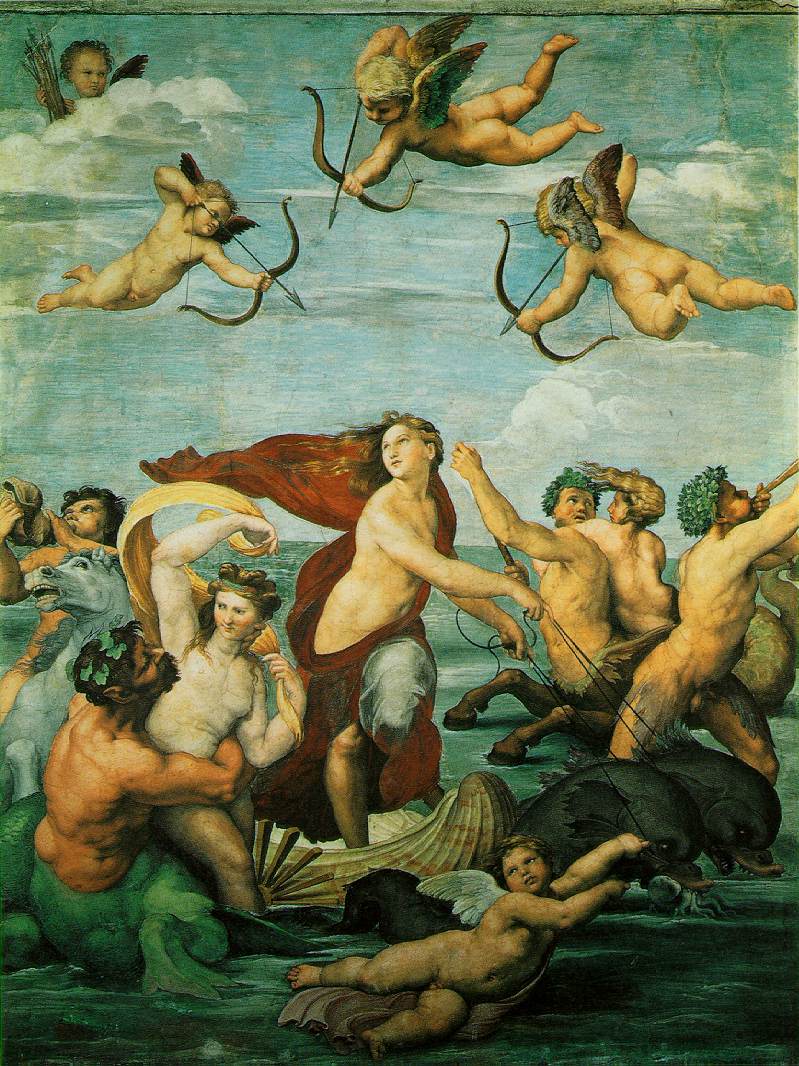
Since my paper was about the history of Roman Paintings, here is one of my favorites by Raphael called "The Nymph Galatea"

Tuesday, October 9, 2007

Reflection on Ghostwriting

Here is me as a ghostwriter:


Ah Ghostwriting. At first, I was all for the ghostwriting experience, and I was even thinking about creative ways I could be a nurse and a ghostwriter on the side since writing is enjoyable to me. After completing this assignment however, I have a few more ethical concerns about this subject. I ghostwrote some essays for Justinn (talked about in the previous blog) for medical school applications. While writing these types of essays and personal statements is generally difficult when they are your own, I assumed writing Justinn's would be easier since I am not afraid to talk him up. Quite the opposite seemed to be true however.

Justinn gave me some notes on specific experiences he wanted to talk about, and I pretty much filled in the rest according to the specifications of the essay. Justinn had much say in revising these essays since I had a hard time writing about some of his experiences such as biochemical research. This involvement from him was rather unexpected, because I just always assumed that ghostwriters write the work, then the person who is claiming authorship reviews it, only fixing major concepts that are not aligned with their personal views. Perhaps it was different in my case because of the nature of the essays, and the fact that they were all rather short made it easier to be picky about certain sentences and words. All this being said, the overall experience was interesting, and I ended up feeling just the opposite about ghostwriting than I thought I would; I cannot help but feel guilty or just not right in general. However, if I was getting paid and there were contracts signed etc. I think I would feel better about it.

Overall this assignment did not change my relationship with the author, if anything, it improved the relationship because I learned more about him and his life experiences leading him to a medical profession.

Also, I do not think I changed who I am as an author. Again, because of the nature of these essays, and the fact that they contain a completely different style of writing than formal papers, I think my perceptions of myself remained constant. However, it was interesting in class to hear other people realizing they have their own personal style to writing; this is something I would be interested to know about myself.

Wednesday, October 3, 2007

Ghostwriting and Plagiarism: One in the same?


So we have learned about Ghostwriting and Plagiarism now, and it seems to me the lines can be blurred quite a bit. For instance, I am ghostwriting some of my boyfriend's (Justinn's) essays he needs for applying to medical school. And despite what I said about him in class, he did have a choice to let me help him, and trust me he doesn't always like the fact that I am better than him at writing. (although this is the only subject I can compete with him at an academic level!) I couldn't help but post a picture he is too cute! In some cases he knows how he wants to answer the questions but cannot figure out how to articulate them into a paragraph, keeping it under the word number limit. In other cases, he has absolutely no idea what to say. Now, is it plagiarism if I help him articulate his thoughts? What about if I completely go off of my own knowledge of his life experiences and completely write the essay for him? This is where I have problems, we are supposed to ghostwrite a paper or essay, but at what point is it plagiarism? If he would turn it in? What about if he just used the ideas I wrote for him and reworded them? I would be tempted to say that ghostwriting in this case does coincide with plagiarism a great deal. Medical schools want to hear your voice in the essay, and if they are suspicious they can also look at the essays the students write for their MCAT's.

Thursday, September 27, 2007

Ghostwriting Extravaganza

When reading the article about ghostwriting this week I was shocked to hear that so many people depend on this type of authorship. I was obviously aware the presidents and senators don't write their own speeches. However, I guess I put too much faith in celebrities to actually write their own books. This makes me think of the other day when I was watching the news and Rosie O'Donnell's new book was being talked about. Here us a little clip in case you haven't heard about this.

So Rosie claims she used to break her bones, did she really write this? As of now there is no speculation that she didn't, however I will be more suspicious from now on.

Wednesday, September 19, 2007

The essence of the aura

Today's discussion proved to be, as usual, a clarification of the readings we were assigned. It seems as though no matter what I am thinking while I am reading the "works" I am always way off in my interpretations. However, today's discussion of the "aura" Benjamin speaks of in "The Work of Art and Age of Mechanical Reproduction" seems to have a less solidified representation, so I figured I would take another stab at it.


The way that I think of the "aura" of original works or paintings is similar to class the class in that, whatever this aura is, it cannot be reproduced. That being said, I believe the aura to be for instance, the specific brush strokes or minute details of a painter and his/her painting. Their thoughts at that moment they are painting can never be reproduced, and although there may be a well-known meaning behind a painting, there is something about the original that draws a person in. This draw is something that a reproduction lacks. Perhaps this is also the reason that books (at least in my opinion) are always better than the movies based on them. For example, one of my favorite movies is "The Notebook" (and of course I had to add the most famous photo from the movie.) I saw the movie before reading the book, and I think this was a good thing in this case. When I read the book, and cried even harder than when I watched the movie; if I would have read the book first, I would not have wanted to see the movie in fear of ruining my perceptions of the story. There is just something about reading books word for word, creating a mental image, finding a real attachment to the characters and plot line that movies based on these books lack.


So I imagine the essence of the aura, for me, can be summed up as simply the feeling in your chest when you see an original painting, or read an amazing book, or perhaps the goosebumps on your arms when you see something truly touching. I don't know about you, but I love this feeling.

Wednesday, September 12, 2007

Death of the Author

Today's discussion in class left me perhaps more puzzled than when I first read Roland Barthes' "Death of the Author." I was dreading answering any of the group questions in class, but most of all the first question (which of course then the one that I was assigned.) Our group focused mainly on the lost identity of the author through writing. Barthes says in one part of this piece "it is language which speaks, not the author." To an extent, this is correct; in some cases it is easy to get tangled in the words an forget where the author is coming from. However, this is not always the case. Take Jane Austin for example-some of her books are based off of her true love story. While I have never read any of her works, I think it would be exciting for me to remember where she is coming from, knowing that true love really does happen in real life. So in this case, the author is not forgotten.

Friday, September 7, 2007

Hello everyone! This is my first blog and it will be mainly used for my English class.

I am currently a senior majoring in Child Development, but I hope to go to an accelerated nursing program when I graduate in May. My eventual goal is to become a Doctor of Nursing Practice with pediatric patients.

I am the oldest of 5 children, and I am extremely close with my entire family who lives less than an hour away. I have the most wonderful friends anyone could ask for, and i guess my boyfriend is alright too. =)

In my spare time I enjoy spending time with my family and friends, shopping, watching movies, singing, playing volleyball, and cleaning. (Yes I like to clean.)

If you have any questions or want to know more, feel free to post comments!